
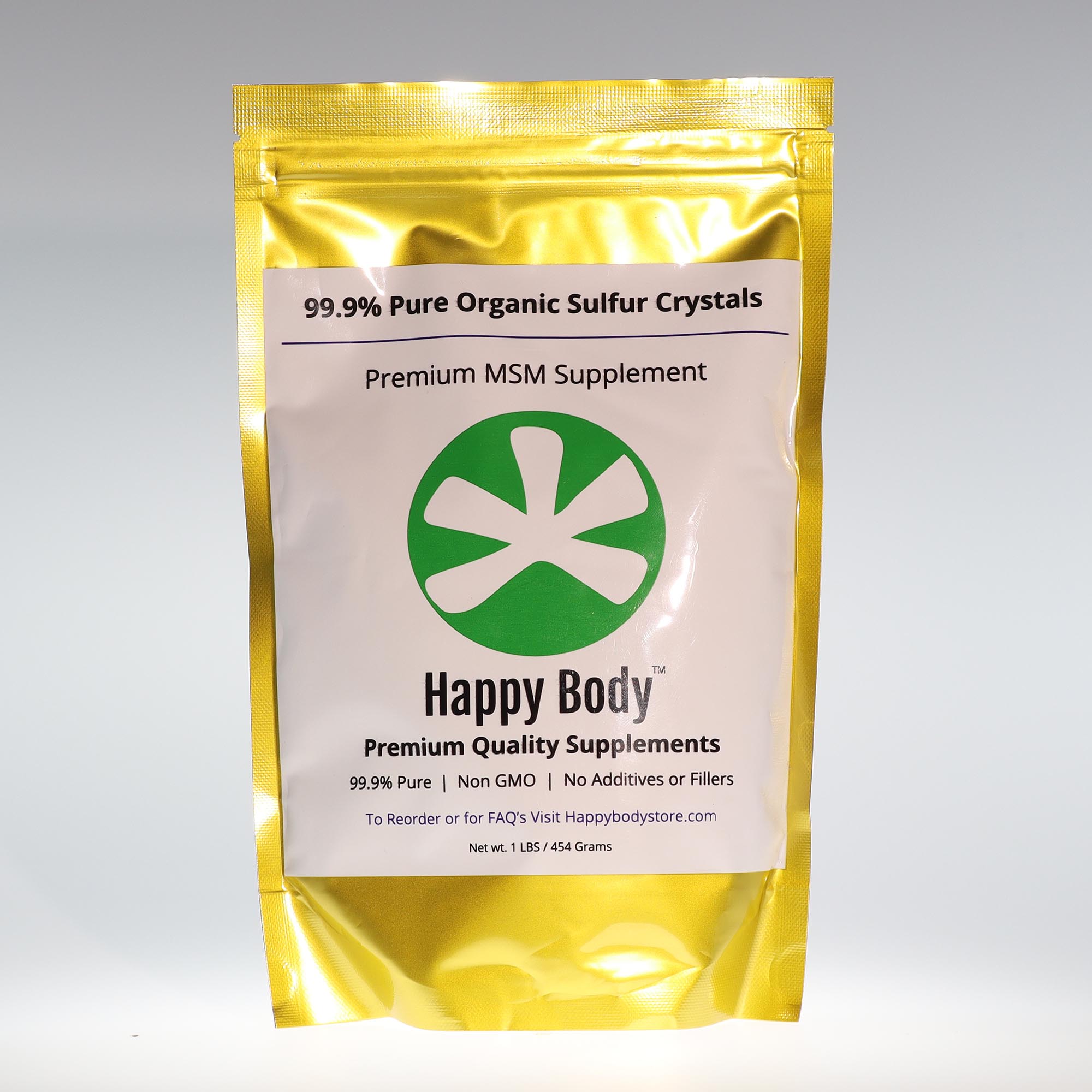
About Organic Sulfur MSM Crystals
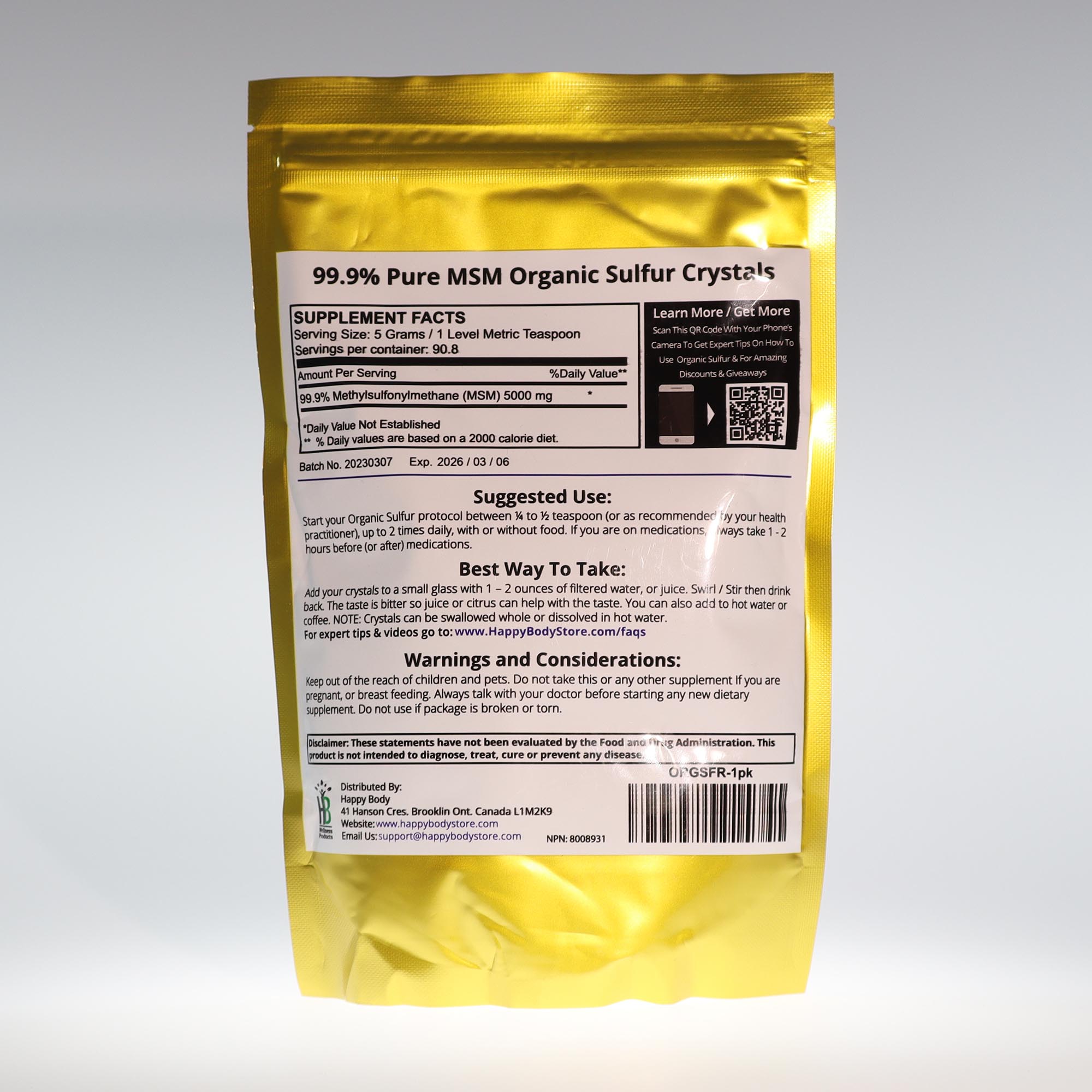
Happy Body Organic Sulfur MSM Crystals contain methylsulfonylmethane (MSM), a naturally occurring organosulfur compound supplied in a pure crystalline form. MSM is sometimes referred to as organic sulfur because it is a carbon-containing compound that also contains sulfur. In this context, the word organic describes its chemical classification rather than agricultural organic certification. The formula contains a single ingredient, without added fillers, binders, flow agents, preservatives or other excipients. The manufacturer describes the crystals as distilled and supplies them in a resealable, foil-lined pouch designed to protect the contents during storage. The crystalline format allows the quantity used to be measured according to the instructions on the package.
What Is Methylsulfonylmethane?
Methylsulfonylmethane, also known as dimethyl sulfone, is a small sulfur-containing organic compound with the molecular formula C₂H₆O₂S. It occurs naturally in small quantities in certain foods and biological environments. MSM is chemically distinct from elemental sulfur and from the sulfur-containing amino acids methionine and cysteine. Although sulfur is an important constituent of many biological molecules, the presence of sulfur in MSM does not mean that consuming MSM directly increases collagen, keratin or glutathione production in a predictable way. MSM is most commonly researched as an oral supplement in relation to joint-related symptoms and certain markers of physical function.
MSM and Joint Comfort: Clinical Research
Some randomized clinical trials have investigated whether oral MSM supplementation influences knee discomfort and functional measures. In a 2006 pilot study, 50 adults with knee osteoarthritis were assigned to MSM or placebo for 12 weeks. Participants in the treatment group received 3 g of MSM twice daily, for a total of 6 g per day. Researchers reported improvements in certain measures of pain and physical function, while other outcomes did not show meaningful differences. Because the study was small and short-term, its authors cautioned that the findings did not establish long-term effectiveness or safety.
Research Reference
Efficacy of methylsulfonylmethane (MSM) in osteoarthritis pain of the knee: A pilot clinical trial (2006).
https://pubmed.ncbi.nlm.nih.gov/16309928/
Additional Research on Knee Mobility
In a 2011 randomized controlled trial, Debbi and colleagues studied MSM supplementation in adults with knee osteoarthritis. Participants received approximately 3.4 g of MSM daily or a placebo for 12 weeks. The researchers found improvements in some physical-function scores, but differences in several pain and stiffness measures were not statistically significant. The investigators concluded that the observed improvements were relatively small and that their clinical significance remained uncertain. This study provides further context for the investigation of MSM, without establishing that every MSM supplement treats arthritis or restores damaged joint structures.
Research Reference
Debbi et al. (2011) – Efficacy of methylsulfonylmethane supplementation on osteoarthritis of the knee: A randomized controlled study.
https://pubmed.ncbi.nlm.nih.gov/21708034/
Full text:
https://pmc.ncbi.nlm.nih.gov/articles/PMC3141601/
MSM for Mild Knee Discomfort
A 2023 randomized, double-blind, placebo-controlled study investigated MSM in 88 adults experiencing mild knee discomfort. Participants received 2 g of MSM daily or placebo for 12 weeks. The researchers reported improvements in the study’s primary knee-related quality-of-life score, together with certain secondary measures. The findings suggest that MSM may influence some aspects of knee-related comfort in selected populations. However, additional research is required to determine how consistently these results can be reproduced, which doses are most appropriate and whether benefits persist over longer periods.
Research Reference
Methylsulfonylmethane Improves Knee Quality of Life in Participants with Mild Knee Pain: A Randomized, Double-Blind, Placebo-Controlled Trial (2023).
https://pubmed.ncbi.nlm.nih.gov/37447322/
What Do Scientific Reviews Conclude?
A 2008 systematic review examined clinical research involving MSM and a chemically related sulfur compound in people with osteoarthritis. The authors reported that the more rigorous MSM trials showed some encouraging findings, but concluded that the available evidence was not sufficient to establish definitive effectiveness. They recommended additional investigations into dosage, long-term safety and clinical outcomes. This remains an important distinction when interpreting individual positive studies. MSM has been investigated for joint discomfort, but research does not establish that it regenerates cartilage, reverses osteoarthritis or provides universally effective pain relief.
Research Reference
Systematic review of the nutritional supplements dimethyl sulfoxide and methylsulfonylmethane in the treatment of osteoarthritis (2008).
https://pubmed.ncbi.nlm.nih.gov/18417375/
MSM and Skin Appearance
MSM has also attracted interest in research involving skin texture, hydration and visible signs of ageing. A 2020 clinical study investigated oral MSM supplementation in two phases. In the initial placebo-controlled phase, 20 participants received 3 g MSM daily or placebo for 16 weeks. A second phase compared 1 g and 3 g daily in 63 participants. Researchers reported improvements in some assessments of facial wrinkles, skin firmness, elasticity and hydration. These findings provide preliminary evidence that MSM supplementation may affect certain skin-appearance measurements. However, the studies were relatively small, and the results cannot establish that this particular crystalline product reduces wrinkles or produces visible changes in every individual.
Research Reference
Beauty from within: Oral administration of a sulfur-containing supplement methylsulfonylmethane improves signs of skin ageing (2020).
https://pubmed.ncbi.nlm.nih.gov/32083522/
MSM and Sulfur-Containing Biological Molecules
Sulfur is a naturally occurring element that contributes to the structure and function of numerous compounds in the human body. Examples include the amino acids methionine and cysteine, as well as glutathione, an important intracellular antioxidant. Sulfur-containing components also contribute to the structure of keratin, a protein found in hair and nails. Collagen is another important structural protein, although its formation depends on several nutrients and biochemical processes rather than on sulfur supplementation alone. Research into MSM has examined its possible interactions with oxidative-stress and inflammatory signaling pathways. Much of this mechanistic work comes from laboratory or animal studies. The results should not be interpreted as evidence that orally consumed MSM selectively eliminates accumulated toxins, dissolves unwanted calcifications or directly repairs injured tissues.
MSM Purity and Crystal Form
This product is sold as pure MSM crystals without additional ingredients. The manufacturer describes the crystals as distilled and reports testing for purity and contaminants. The current YumNaturals listing declares 99.9% purity. Specific numerical purity statements should be checked against the current batch’s certificate of analysis before publication. The crystalline form is a practical presentation choice; it does not independently establish that MSM crystals are more effective or better absorbed than equivalent amounts of MSM supplied in capsules or powder.
How MSM Differs from Other Sulfur Compounds
MSM is sometimes confused with several other sulfur-containing substances.
- Elemental sulfur is a chemical element and is not the same substance as MSM.
- Sulfates and sulfites are different chemical compounds with distinct applications and biological characteristics.
- Sulfur-containing amino acids are components of proteins, while MSM is a separate organosulfur molecule.
The term organic sulfur does not mean that the product has been produced under certified-organic agricultural standards. Understanding these distinctions helps clarify what the product actually contains.
Related Products and Education
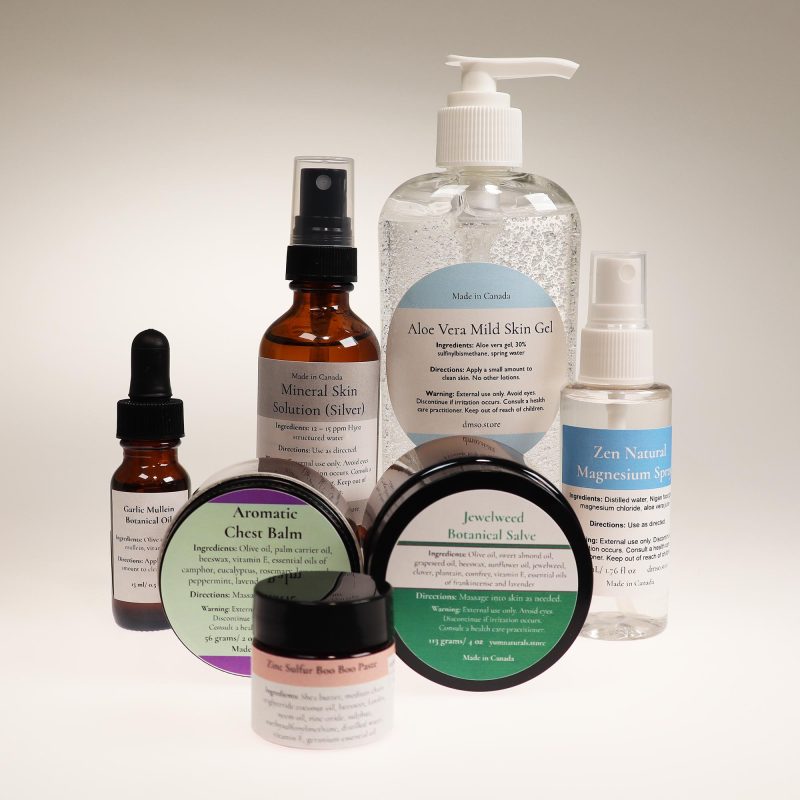
For customers exploring complementary mineral and body-care products, related options include:
Zen Natural Magnesium Spray
https://yumnaturals.store/product/yumnaturals-zen-magnesium/
Botanical Tea – Liver Blend
https://yumnaturals.store/product/botanical-tea-liver-blend/
The tea is a separate botanical beverage and should not be presented as a treatment to combine with MSM.
Ingredients & Product Details
Ingredient: Methylsulfonylmethane (MSM), also known as dimethyl sulfone.
Declared Purity: 99.9%, pending current batch confirmation.
Product Form: Distilled MSM crystals.
Net Contents: 454 g (1 lb).
Packaging: Resealable foil-lined pouch.
Additives: None declared.
Canadian Natural Product Number: Confirm from current product packaging.
Storage: Keep sealed in a cool, dry place away from moisture.
Safety & Important Information
Consult a healthcare practitioner before use if pregnant or breastfeeding. Do not use during pregnancy or breastfeeding if instructed to avoid it by the current authorized product label. Consult a healthcare practitioner before use if you have an ongoing medical condition or take prescription medications. Some people may experience digestive discomfort, nausea, skin reactions or other adverse effects.
Discontinue use if an allergic reaction or persistent adverse symptoms occur. The safety of prolonged high-dose MSM supplementation has not been adequately established. Follow the dosage and duration specified on the current Canadian product label. Keep out of reach of children and pets. Do not use if the package is damaged or the contents are contaminated.

Reviews
There are no reviews yet.